

 Eng
Eng 
 Español
 عربى
عربى

Lithium Pruning Shears Factory Drives Horticultural Efficiency
 2026.01.09
 Industry News
In the realm of professional landscaping, arboriculture, and dedicated gardening, a significant shift is underway from manual tools to powered alternatives. Central to this transition is the specialized production of lithium pruning shears, a process that occurs within a dedicated lithium pruning shears factory. These manufacturing facilities are focused on producing cordless, battery-powered cutting tools that offer enhanced power, reduced user fatigue, and improved efficiency for trimming branches and stems. The operation of a lithium pruning shears factory highlights the integration of modern battery technology, precision mechanics, and ergonomic design to meet the demands of both commercial and high-end consumer markets.
The core product emerging from a lithium pruning shears factory is a handheld cutting tool driven by a rechargeable lithium-ion battery pack. Unlike traditional manual shears or older corded electric models, these tools provide complete freedom of movement. The manufacturing process within a lithium pruning shears factory involves several key stages. This includes the fabrication of the housing and cutting mechanism—often from aluminum alloys or reinforced polymers for a balance of strength and weight—and the assembly of the precision gearbox that translates the motor's power into the cutting blade's forceful action. A parallel, critical line involves the assembly and quality testing of the lithium-ion battery packs and chargers that power the system.
Design and engineering priorities at a pilot lithium pruning shears factory revolve around performance, safety, and durability. The cutting mechanism is a focal point, with blades typically made from high-carbon steel or coated materials to retain a sharp edge and resist sap adhesion. Safety features, such as a hand guard and a reliable locking mechanism, are integral to the design. Ergonomics are also crucial; the tool must be well-balanced to less wrist strain during prolonged use. The lithium pruning shears factory must ensure that the final product is robust enough to withstand outdoor conditions, including exposure to moisture and plant debris, which influences choices in seals, materials, and finishes.
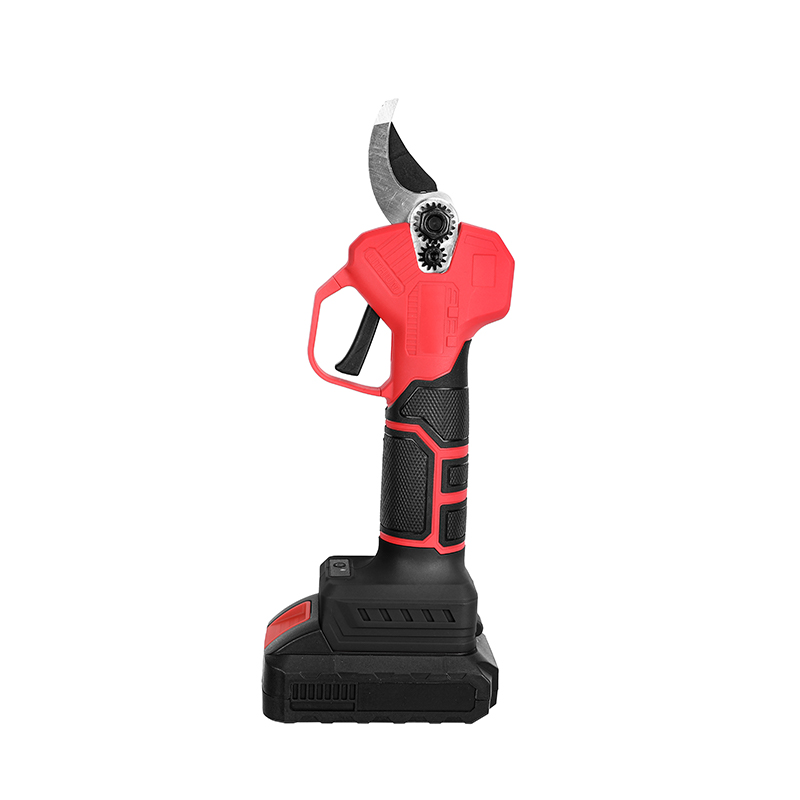
The application focus for tools produced in a lithium pruning shears factory is broad. The primary market includes professional arborists, vineyard managers, orchard workers, and landscaping crews for whom speed and reduced physical strain translate directly into productivity and lower labor costs. A secondary, growing market comprises serious home gardeners and orchard owners who value the power and convenience these tools offer over strenuous manual cutting, especially for larger or more frequent pruning tasks. The production output of a lithium pruning shears factory, therefore, often ranges from heavy-duty professional models with larger cutting capacities to lighter-duty versions for enthusiast use.
Innovation flowing from a lithium pruning shears factory is likely to focus on enhancing battery life and power density, further refining ergonomics, and introducing smarter features. Developments may include brushless motor technology for greater efficiency and longer runtime, integration of electronic safety sensors to prevent accidental activation, and the use of lighter, stronger composite materials. As battery technology continues to advance and the demand for efficient, low-impact landscaping tools grows, the lithium pruning shears factory stands as a key innovator, transforming a fundamental horticultural task through the application of portable electrical power and thoughtful design.



 Home
Home +86-135 0659 5098
 No. 167, Lingshi Road, Chengxi New District, Yongkang City, Jinhua City, Zhejiang Province, China.
Copyright ©YONGKANG XINDAI TECHNOLOGY CO.,LTD. All rights reserved.
China Garden Tool
