

 Eng
Eng 
 Español
 عربى
عربى

Hedge Machine Transforms Landscape Maintenance Efficiency
 2026.01.16
 Industry News
For professional landscapers, municipal maintenance crews, and dedicated property owners, the task of trimming and sculpting hedges and shrubs has been transformed by the advent of the modern hedge machine. These powered tools, which range from handheld trimmers to large tractor-mounted units, offer a significant leap in efficiency and precision over manual shears. The development and application of the hedge machine represent a convergence of ergonomic design, cutting-edge power sources, and specialized blade technology, all aimed at making the maintenance of vegetative barriers and ornamental plantings faster, less labor-intensive, and more uniform.
At its core, a hedge machine is designed to make rapid, clean cuts through dense foliage. The common type is the hedge trimmer, which features a long, dual-edged blade that reciprocates back and forth. This blade is driven by an electric motor (corded or cordless) or a small gasoline engine. The fundamental innovation of the hedge machine lies in this powered cutting action, which allows the operator to cover large linear distances quickly, maintaining a straight edge or a smooth curve with relative ease. Larger, more specialized hedge machine units, such as tractor-pulled or front-loader mounted cutters, are used for maintaining extensive hedgerows on farms or along highways, where they can process hundreds of feet of growth in a single pass.
The evolution of the hedge machine has been heavily influenced by advancements in power technology. While gasoline-powered models are valued for their high power and unrestricted mobility in large spaces, the market has seen substantial growth in electric hedge machine options. Cordless, battery-powered trimmers, in particular, have gained immense popularity. Powered by modern lithium-ion batteries, these tools offer quiet, vibration-reduced, and emission-free operation, making them suitable for use in residential areas, public parks, and noise-sensitive environments. This shift reflects a broader trend toward more sustainable and user-friendly landscaping equipment.
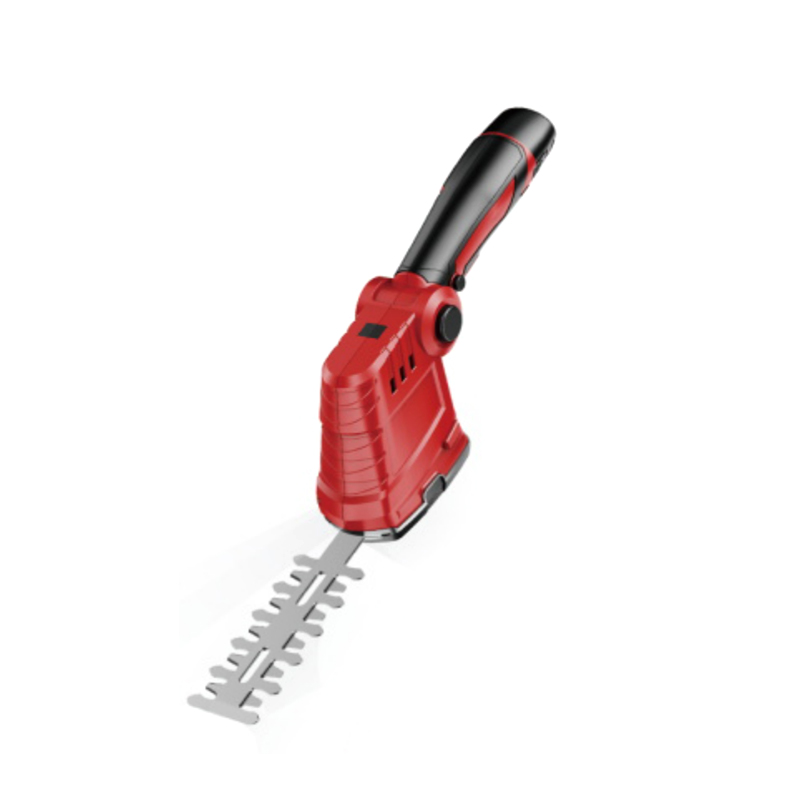
Design considerations for a high-performance hedge machine extend beyond the power source. The length and tooth spacing of the blade determine its suitability for different tasks: longer blades for large, flat surfaces and closer tooth spacing for finer, detailed work on smaller-leaved shrubs. Ergonomic features are critical, as operators may use the tool for extended periods; these include adjustable handles, well-balanced weight distribution, and effective anti-vibration systems. For professional-grade hedge machine units, durability is paramount, with hardened steel blades and robust housings designed to withstand daily use and occasional contact with fence wires or other obstructions.
The application of the hedge machine is central to both aesthetic and functional landscaping. It is indispensable for creating and maintaining the crisp, geometric lines of formal garden hedges, topiaries, and privacy screens. Beyond aesthetics, regular trimming with a hedge machine promotes denser, healthier plant growth by encouraging branching. In agricultural settings, large-scale hedge machine equipment is used for managing boundary hedgerows, an important ecological feature, and for maintaining vegetation along roadsides and waterways for safety and access.
Innovation in hedge machine technology is likely to focus on greater intelligence, enhanced battery systems, and improved safety. Future developments may include hedge machine units with sensors to maintain a consistent cutting distance or programmable guides for complex shapes. Battery technology will continue to improve, offering longer runtimes and faster charging, further solidifying the dominance of cordless electric models. As urban green spaces become more valued and the demand for professional landscaping services grows, the hedge machine will remain an essential tool, continually refined to make the art and science of shaping our living landscapes more efficient, precise, and accessible.



 Home
Home +86-135 0659 5098
 No. 167, Lingshi Road, Chengxi New District, Yongkang City, Jinhua City, Zhejiang Province, China.
Copyright ©YONGKANG XINDAI TECHNOLOGY CO.,LTD. All rights reserved.
China Garden Tool
