

 Eng
Eng 
 Español
 عربى
عربى

Single Hand Saw Remains Essential Manual Tool
 2026.02.06
 Industry News
In an era increasingly dominated by power tools, a classic manual implement continues to hold a valued place among professionals and hobbyists: the single hand saw. This fundamental cutting tool, designed for operation by one person using a single hand or a two-handed grip on its one handle, remains indispensable for its portability, control, and independence from power sources. The enduring presence and evolution of the single hand saw underscore its unique role in precision trimming, quick cuts, and situations where larger, powered equipment is impractical or unavailable.
The defining characteristic of the single hand saw is its self-contained design, combining a toothed blade with an attached handle. This simple configuration allows for immediate use without setup, fuel, or electricity. The effectiveness of a single hand saw is determined by its blade geometry—including tooth pattern, set, and pitch—which is optimized for specific materials. A fine-toothed backsaw for joinery, a coarse-toothed panel saw for rough lumber, and a versatile general-purpose hand saw each represent specialized forms of the single hand saw. The user's skill in guiding the blade determines the cut's accuracy, making the single hand saw a direct extension of the craftsman's intention, favored for tasks requiring a nuanced touch.
The practical applications for the single hand saw are diverse and often critical. On construction sites, a carpenter keeps a single hand saw readily accessible for trimming door jambs, cutting shims, or making adjustments to framing lumber when a circular saw is too cumbersome or the cut is too small. For plumbers and electricians, a specialized single hand saw, such as a keyhole saw or jab saw, is essential for making precise openings in drywall, paneling, or pipes. In gardening and landscaping, a pruning saw—a type of single hand saw with curved or straight blades and aggressive teeth—is the preferred tool for cleanly cutting branches, promoting plant health. The single hand saw is also a cornerstone of woodworking, where dovetail saws and tenon saws enable the fine joinery that defines quality craftsmanship.
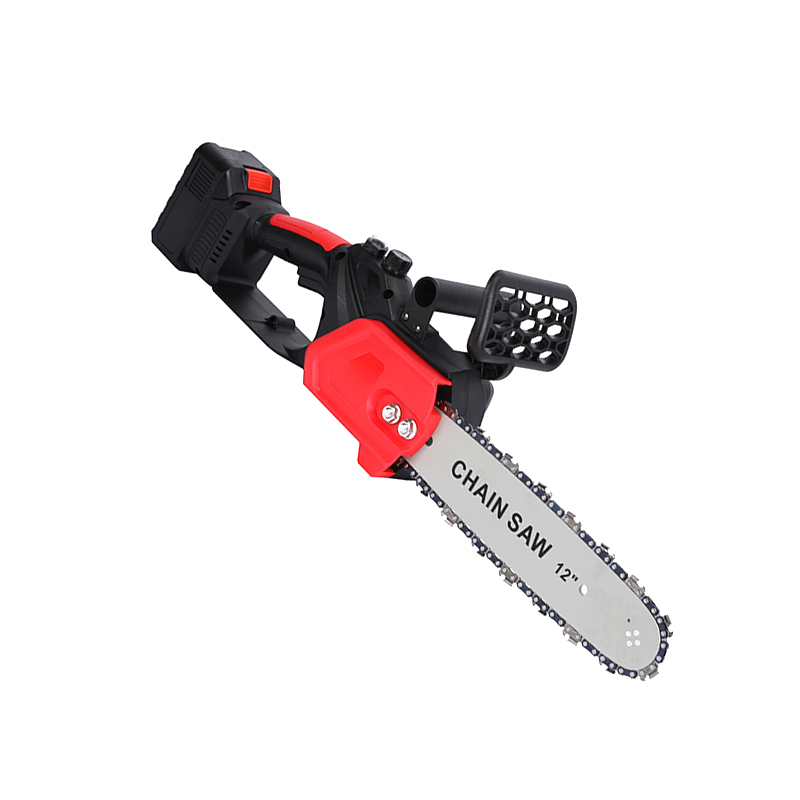
Recent developments in the design and manufacturing of the single hand saw focus on enhancing performance, durability, and user comfort. Modern blades are often made from high-carbon steel or bimetal constructions, featuring impulse-hardened teeth that stay sharper longer. Ergonomic handles, molded from advanced polymers or laminated wood, are designed to reduce hand fatigue and improve control during extended use. Some contemporary versions of the single hand saw incorporate innovative tooth patterns that claim faster cutting and reduced binding in green or damp wood. These refinements ensure the traditional single hand saw meets modern expectations for efficiency.
The single hand saw is unlikely to be rendered obsolete by technological advancement. Its value lies in its simplicity, reliability, and the direct skill it cultivates. Future trends may involve further specialization of blade coatings for reduced friction and corrosion resistance, or the integration of lightweight composite materials for the handle and blade spine. As both a practical tool and a symbol of foundational craftsmanship, the single hand saw will continue to be a trusted companion for anyone needing to make a controlled, deliberate cut, securing its place in workshops, tool belts, and toolboxes for the foreseeable future.




 Home
Home +86-135 0659 5098
 No. 167, Lingshi Road, Chengxi New District, Yongkang City, Jinhua City, Zhejiang Province, China.
Copyright ©YONGKANG XINDAI TECHNOLOGY CO.,LTD. All rights reserved.
China Garden Tool
